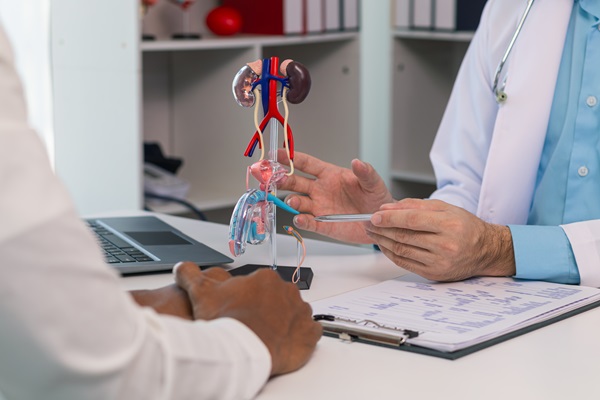
Understanding one's prostate cancer treatment options is a vital part of easing anxiety about the diagnosis and making informed care decisions. Those newly diagnosed must sort through a lot of information; our oncology team is here to help. This brief overview of how prostate cancer treatment works aims to help patients make sense of their options.
Prostate cancer explained
Prostate cancer gets its name due to it beginning in the prostate, the small walnut-sized gland in a man's pelvic area that produces seminal fluid. It is one of the most common types of cancer in men. The American Cancer Society reports about one in nine men will be diagnosed with it in their lifetime.
Risk factors include a family history of the disease and being over the age of 50. In addition, prostate cancer develops more often in African American men and Caribbean men of African ancestry than men of other races. However, if caught early, most cases respond well to treatment.
How treatment works
Treatment is tailored to each patient's circumstances and usually involves a combination of therapies. In addition to an oncologist, other specialists, such as a urologist, may be part of a patient's care team. Treatment decisions are made between the patient and their care team and are influenced by the following factors:
- Stage and grade of cancer
- Patient's age and expected lifespan
- Additional health concerns
- Likelihood of successful treatment
The patient's feelings are also considered, including their concerns over the possible side effects of treatment.
Treatment Options
There is no one-size-fits-all prostate cancer treatment. Our team evaluates each patient individually when planning treatment, considering a patient's age and overall health, how fast the cancer is growing, and the benefits and side effects of treatment. The most effective plans are often a combination of one or more of the following approaches to prostate cancer treatment. Each approach has its own set of advantages and side effects to consider.
Active surveillance
This approach involves regular tests and exams to monitor the cancer. Treatment may start with this if the cancer is caught at an early stage, is slow-growing, is confined to a small area, and is not showing symptoms. Active surveillance includes regular blood tests, rectal exams, and prostate biopsies to track the cancer's progression. We may also recommend this approach for those of an advanced age or with another serious health condition that would make other prostate cancer treatments difficult.
Surgery
Surgery may be an option for cancer confined to the prostate. In addition, it may benefit those with more advanced cancer when combined with other treatments, such as chemotherapy. Surgery can involve the removal of the prostate gland, some of the surrounding tissue, and lymph nodes.
Radiation therapy
This common cancer treatment uses radiation or high-powered energy to kill cancer cells. Radiation therapy is often combined with surgery or other treatment and can target cancer confined to the prostate or slow the growth of cancer that has spread to other parts of the body. It is possible to administer this treatment in a series of sessions of external beam radiation therapy or by placing a source of steady low-dose radiation in the prostate.
Hormone therapy
Testosterone helps prostate cancer cells grow. Hormone therapy aims to stop the body from producing testosterone, killing the cells, or slowing their growth. Hormone therapy typically involves medication and can help shrink advanced cancers. Hormone therapy may be used before radiation treatments to help increase their effectiveness.
Chemotherapy
If the cancer does not respond to hormone therapy, chemotherapy may be an option. This therapy employs drugs given orally or through IV to kill cancer cells. Chemotherapy may also be combined with other therapies and is an option for cancer that has spread to other areas of the body.
Ablative therapies
This therapy is considered for treating small prostate cancers when surgery is not an option. There are two main approaches to ablative therapy: cryoblation and high-intensity focused ultrasound. Cryoblation employs very cold gas to freeze prostate tissue, killing the cancer cells and some of the surrounding tissue. High-intensity focused ultrasound, or HIFU uses heat energy to do this.
Immunotherapy and targeted drug therapy
This therapy can help the body's immune system fight the cancer through medication or preparation using the patient's immune cells. Cancer cells produce proteins to help hide them from the immune system, but this therapy impairs that process. Through targeted drug therapy, doctors use medication designed to attack cancer cells, killing them, blocking their growth, or preventing their spread. These therapies are an option for treating advanced cancers that do not respond to hormone therapy.
We can help make sense of your options
Facing a cancer diagnosis is never easy. However, the team at Lindenberg Cancer & Hematology Center is here to help ease your anxieties and match you with the most effective treatment. Call our team today to learn more about your prostate cancer treatment options.
Request an appointment here: https://lindenbergcancer.com or call Lindenberg Cancer & Hematology Center at (856) 475-0876 for an appointment in our Marlton office.
Check out what others are saying about our services on Yelp: Prostate Cancer Treatment in Marlton, NJ.
Recent Posts
While ovarian cancer and cysts develop in the same organ and share similar symptoms, they are not the same condition. Many individuals worry about the worst-case scenario when they feel this sort of discomfort, but knowledge is the first step toward peace of mind. Learning how to spot the key differences can help you make…
Blood clot disorders often require careful medical treatment, and daily diet can influence how well a care plan supports safe circulation. Food choices do not replace medication, monitoring, or guidance from an oncology and hematology team, but they can affect inflammation, weight, hydration, and medication consistency. Here is a breakdown of how a thoughtful diet…
After a cancer diagnosis, it is important to find the right care for your needs. Searching for chemotherapy near me helps patients and their families learn how treatment works and why oncologists choose certain medications. The following guide explores the different types of chemotherapy and what to expect during treatment. Chemotherapy is a medical treatment that…
Visiting a cancer treatment center can be overwhelming, even when the oncology team provides high-quality care. Loved ones want to help make visits easier. However, it is important to support the patient in a way that respects their comfort, independence, and peace of mind. By understanding common dos and don’ts, you can help make each…