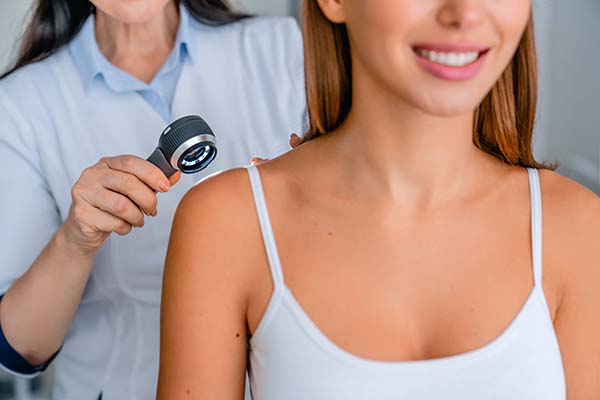
The Centers for Disease Control and Prevention, CDC, states that skin cancer is the most common form of cancer, affecting people of all ages. Skin cancers are usually harmless, but they can sometimes grow into tumors or spread to other parts of the body. There are a number of skin cancer treatment, including therapies and surgeries. Below is an outline of the available skin cancer treatment options designed for the various types and stages of cancer.
Available Skin Cancer Treatment Options
Radiation Therapy
Radiation therapy uses high-energy rays to kill cancer cells. It is a common skin cancer treatment and can be used as a primary treatment or combined with other treatments. Radiation therapy may also treat cancer that has spread to other parts of the body.
Radiation therapy comes in two forms: external and internal radiation. External beam radiation therapy uses outside sources, such as X-rays or gamma rays, directed at specific areas of the body from outside it. Internal beam radiation therapy aims beams directly into tumors through needles (interstitial implants).
Chemotherapy
Chemotherapy is a type of cancer treatment that uses drugs to kill cancer cells, shrink tumors and prevent them from spreading. Depending on the extent or stage of the patient’s skin cancer, they may need to attend chemotherapy sessions for several days at a time, lasting weeks or months. During these sessions, our team will provide the drugs needed to kill cancer cells through pills, injections directly into the patient’s bloodstream, or an IV.
This type of therapy can be done alone or in combination with other treatments, such as radiation therapy or surgery. Chemotherapy treats many types of cancer, like melanoma, basal cell carcinoma, and breast cancer.
Photodynamic Therapy
Photodynamic therapy (PDT) is a type of skin cancer treatment that uses light and drugs to kill cancer cells. Our oncologist use PDT to treat those with basal cell carcinoma, squamous cell carcinoma, and actinic keratosis.
The photosensitizer used in this type of therapy attaches itself to the surface of the patient’s skin. Then it absorbs the light from the laser treatment while the oncologist administers it. When the photosensitizer absorbs the light energy, it is activated and produces a chemical reaction in the body, which kills nearby cancer cells by damaging their inner structure.
Immunotherapy
Immunotherapy is a treatment that uses the patient’s immune system to fight cancer. The oncologist may use it in combination with the other treatments on this list or independently. There are two main types of this skin cancer treatment immunotherapy drugs and immune checkpoint inhibitors.
Immunotherapy drugs are medications that boost or restore the body’s immune system so it can attack cancer cells. Immune checkpoint inhibitors are drugs that target proteins on the surface of T cells (a type of white blood cell). They work by removing these proteins so that T cells can recognize, attack and kill tumor cells.
Chemical Peels
Chemical peels can also treat and prevent skin cancer. Chemical peels can remove precancerous lesions by causing the layer of skin containing the lesion to die and fall off. This allows the body’s immune system to attack and kill any remaining cancerous cells.
Chemical peels can also be used to treat superficial basal cell carcinomas and squamous cell carcinomas that have not spread beyond the dermis (surface layer of the skin). The acid used in this skin cancer treatment causes inflammation at the site of the lesion, which stimulates an increased response from the patient’s immune system.
The more aggressive the acid solution, such as phenol or trichloroacetic acid (TCA), the more effective it is at removing precancerous lesions and treating various forms of skin cancer.
Surgery
The oncologist will first perform a biopsy to determine if a patient needs surgery. The biopsy is a procedure where a tissue sample is taken from the suspected area of cancer, examined under a microscope, and sent for analysis by a pathologist. The pathologist will determine if the cancerous cells are present and what type they may be. If it is determined that basal cell carcinoma or squamous cell carcinoma is present, the oncologist will recommend Mohs surgery.
Mohs surgery is one of the most common and specialized skin cancer treatments available today. In this surgery, the oncologist uses a microscope to examine the edges of the cancerous growth. They will then remove layers of skin overlying the cancer in thin slices (called flaps) until only healthy tissue remains. The process may need to be repeated several times until all margins are clear of cancer cells. This technique allows for a high cure rate while minimizing damage to normal tissue and scarring.
Receive Skin Cancer Treatment Today
Most forms of skin cancer are harmless when caught early. Therefore, if you suspect you have or were recently diagnosed with this disease, we encourage you to contact our Marlton office by calling (856) 475-0876 as soon as possible. Our oncologist will help customize a skin cancer treatment plan no matter the type or stage you are experiencing.
Check out what others are saying about our services on Yelp: Skin Cancer Treatment in Marlton, NJ.
Recent Posts
Blood clot disorders often require careful medical treatment, and daily diet can influence how well a care plan supports safe circulation. Food choices do not replace medication, monitoring, or guidance from an oncology and hematology team, but they can affect inflammation, weight, hydration, and medication consistency. Here is a breakdown of how a thoughtful diet…
After a cancer diagnosis, it is important to find the right care for your needs. Searching for chemotherapy near me helps patients and their families learn how treatment works and why oncologists choose certain medications. The following guide explores the different types of chemotherapy and what to expect during treatment. Chemotherapy is a medical treatment that…
Visiting a cancer treatment center can be overwhelming, even when the oncology team provides high-quality care. Loved ones want to help make visits easier. However, it is important to support the patient in a way that respects their comfort, independence, and peace of mind. By understanding common dos and don’ts, you can help make each…
Hematologic disease treatment for leukemia focuses on controlling abnormal blood cell growth, protecting healthy cells, and helping patients move toward remission. Leukemia affects the blood and bone marrow, where the body forms blood cells. An oncologist can evaluate the type of leukemia, the pace of the disease, and the patient's overall health before recommending a…