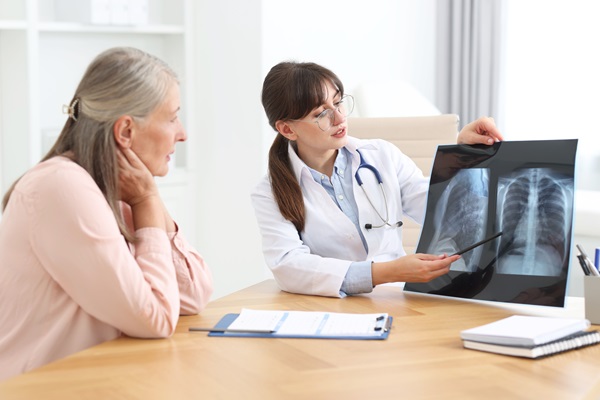
Advances in medical technology have broadened the range of available lung cancer treatments, which now include surgery, radiation therapy, chemotherapy, targeted therapies, and immunotherapy. Due to the various types of treatments, having a multidisciplinary oncology care team increases the chances of remission. Knowing what to expect from these treatments can help patients feel more informed and better prepared for the journey ahead.
About lung cancer
Before exploring lung cancer treatment options, it is essential to understand the two main types of lung cancer as categorized by the American Cancer Society: non-small cell lung cancer (NSCLC) and small cell lung cancer (SCLC). NSCLC is more common and accounts for approximately 85% of cases. It grows and spreads more slowly than SCLC, which is more aggressive and typically diagnosed at a later stage.
Each type of lung cancer may require a different treatment approach, depending on its stage, location, and the patient's overall health. Typically, various oncologists (medical, surgical, radiologist, hematologist) coordinate to create a care plan that meets the patient's needs.
The road to remission with lung cancer treatments
The lung cancer treatment journey can be challenging, but advances in medical science have improved outcomes and expanded options. Patients may receive one or more types of treatment, often in combination. The side effects and recovery process vary depending on the type of lung cancer, the chosen treatment, and the individual's health.
Surgery
Surgery is a common lung cancer treatment for patients with early-stage non-small cell lung cancer. The surgery aims to remove the tumor and any nearby affected tissue. There are several surgical options depending on the size and location of the tumor, including lobectomy, pneumonectomy, and wedge resection. However, surgery may not be an option for all patients, particularly those with small-cell lung cancer or an advanced stage of the disease. In some cases, surgery is combined with other treatments like chemotherapy or radiation therapy to improve outcomes.
Radiation therapy
Radiation therapy uses high-energy rays to kill cancer cells or shrink tumors. It can be used alone or in combination with other treatments, particularly for patients who are not candidates for surgery. For some, oncologists can use it to shrink tumors or reduce cancer cells before surgery. For others, they may use it after surgery to kill remaining cancer cells. Note that radiation therapy can be highly effective, but it also comes with potential side effects such as fatigue, skin irritation, and difficulty swallowing, depending on the location of the tumor.
There are two main types of radiation therapy: external beam radiation therapy (ERBT) and stereotactic body radiotherapy (SBRT). EBRT is the most common form of radiation therapy and involves directing radiation at the cancer from outside the body. SBRT, also known as radiosurgery, delivers a high radiation dose precisely to the tumor, often in fewer treatments than EBRT. SBRT is typically used for small, early-stage lung cancers that cannot be surgically removed.
Chemotherapy
Chemotherapy is a systemic treatment that uses drugs to kill cancer cells throughout the body, which can control the spread of the disease, alleviate related symptoms, and shrink tumors. It is often used for lung cancer treatment in patients with advanced-stage cancer or combined with surgery or radiation. Its use varies depending on the type of lung cancer.
Further, oncologists typically administer chemotherapy drugs through an IV or taken orally in cycles, allowing periods for the body to recover between treatments. Common side effects of chemotherapy include nausea, vomiting, hair loss, and an increased risk of infection. Advances in supportive care have helped to reduce the severity of these side effects, making chemotherapy more tolerable for many patients.
Targeted therapy
Targeted therapies represent a significant advancement in lung cancer treatment, as they have fewer side effects than chemotherapy. Unlike chemotherapy, which attacks all rapidly dividing cells, targeted therapy drugs focus specifically on cancer cells by blocking the molecules involved in tumor growth and spread. According to the American Cancer Society, oncologists often employ these strategies in patients with specific genetic mutations, such as EGFR mutations or anaplastic lymphoma kinase gene (ALK) rearrangements.
Immunotherapy
Immunotherapy is a relatively new form of lung cancer treatment that harnesses the body's immune system to fight cancer. Immune checkpoint inhibitors help uncover cancer cells, allowing the immune system to recognize and attack them. According to a 2020 study published by PLOS One in the National Library of Medicine, this therapy has shown promising results, particularly in patients with advanced non-small cell lung cancer who have not responded to other treatments.
Schedule an appointment
While lung cancer remains a serious diagnosis, understanding the treatment landscape offers a clearer picture of what patients can expect. With continued research and clinical advancements, lung cancer treatment options are becoming more personalized and effective, providing hope for better outcomes and improved quality of life. If you are under suspicion of or were recently diagnosed with lung cancer, contact Lindenberg Cancer & Hematology Center's Marlton office to schedule an appointment.
Request an appointment here: https://lindenbergcancer.com or call Lindenberg Cancer & Hematology Center at (856) 475-0876 for an appointment in our Marlton office.
Check out what others are saying about our services on Yelp: Lung Cancer Treatment in Marlton, NJ.
Recent Posts
Being referred to a hematologist may feel like a cause for concern, particularly when it follows an unexpected blood test result. However, a referral does not automatically mean cancer or another life-threatening condition. It simply means that your primary care doctor wants a specialist to take a closer look at the blood, bone marrow, and…
While ovarian cancer and cysts develop in the same organ and share similar symptoms, they are not the same condition. Many individuals worry about the worst-case scenario when they feel this sort of discomfort, but knowledge is the first step toward peace of mind. Learning how to spot the key differences can help you make…
Blood clot disorders often require careful medical treatment, and daily diet can influence how well a care plan supports safe circulation. Food choices do not replace medication, monitoring, or guidance from an oncology and hematology team, but they can affect inflammation, weight, hydration, and medication consistency. Here is a breakdown of how a thoughtful diet…
After a cancer diagnosis, it is important to find the right care for your needs. Searching for chemotherapy near me helps patients and their families learn how treatment works and why oncologists choose certain medications. The following guide explores the different types of chemotherapy and what to expect during treatment. Chemotherapy is a medical treatment that…