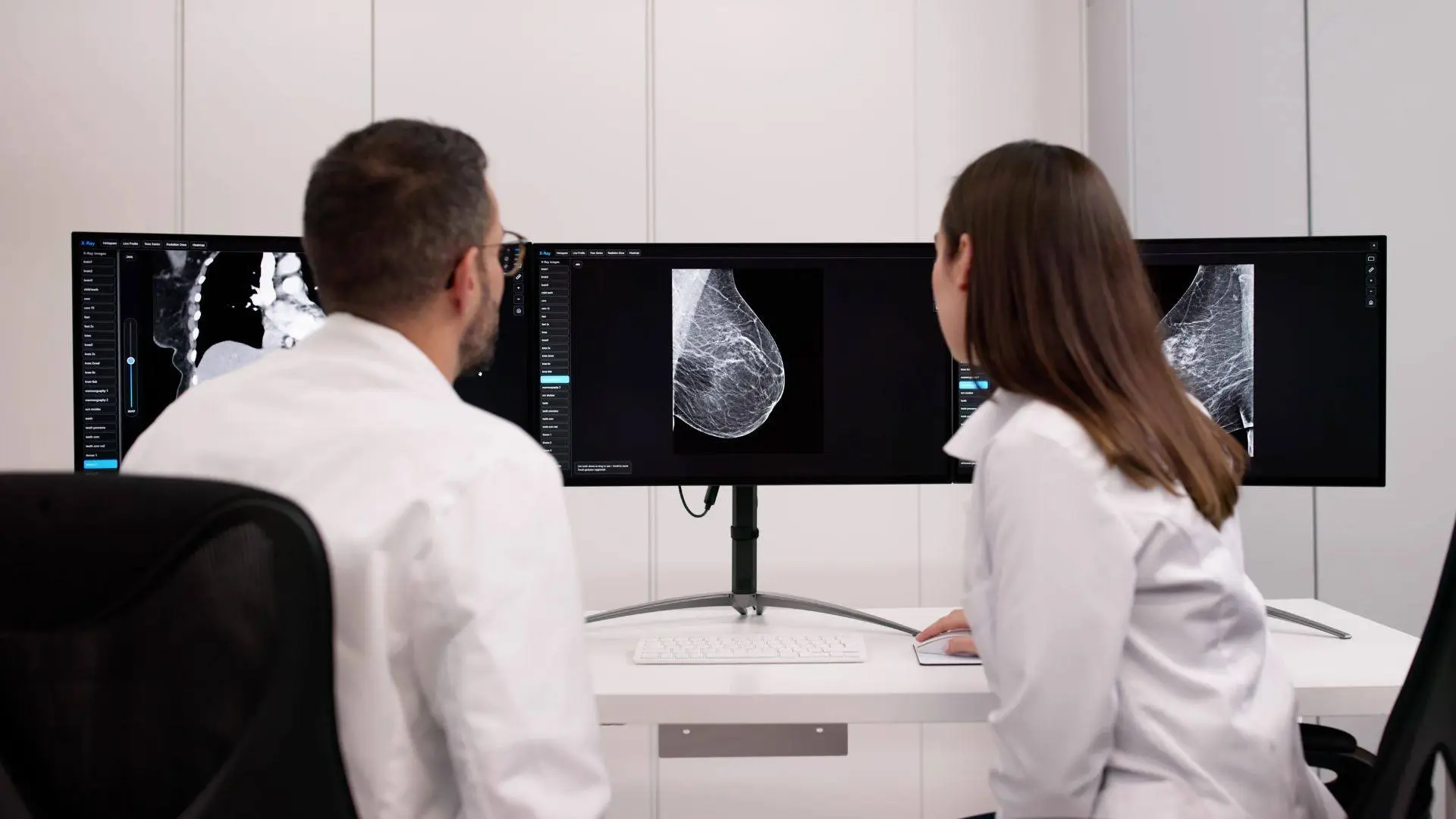
Regardless of risk factors, all women should get regular screenings at least once a year. Screenings typically involve a physical exam, in which we feel the breasts for any noticeable signs. Patients who show signs may require imaging tests, including film mammograms, digital mammograms, and digital breast tomosynthesis (DBT) to confirm a breast cancer diagnosis.
Breast Cancer Treatment
Marlton, NJ
Breast cancer is a fairly common type of cancer that occurs in the breast area. There are a variety of treatment options depending on the stage and severity of a patient’s case. Today, advancements in medical technology have provided life-saving results, with many patients achieving a full recovery. It is important to seek immediate treatment when diagnosed with breast cancer to prevent the disease from progressing.
At Lindenberg Cancer & Hematology Center, we offer breast cancer treatment. Our team can diagnose, treat, and help patients after recovery to prevent recurrence or remission.

What is Breast Cancer?
Breast cancer is a disease in which cancer cells form at the breast and, over time, spread to surrounding areas. According to the National Breast Cancer Foundation, cancer spreads in three ways: Damaged cells replicate, creating more damaged cells and tumor growth; The body’s hormones and chemicals accelerate the growth of some tumors; Lymph and blood vessels can carry cancer to other areas of the body. The three natural body chemicals that can accelerate cancer cell growth are estrogen, progesterone, and the HER2/neu gene (growth hormone).
Our bodies contain healthy cells that work together as building blocks through a pre-wired plan. However, mutated cells create a discrepancy in that plan and form tumors, or masses of tissue, in a particular area. Since these cells do not function as part of the body’s natural process, it has trouble fighting off the disease, allowing it to grow and spread to other parts of the body.
Risk Factors of Breast Cancer
Although there are no proven causes of breast cancer, there are certain factors that can increase one’s risk of acquiring the disease. Among these risk factors, there are some that are in one’s control and others that are outside of our control. The CDC lists factors for both of these:
Risk Factors Outside of Control
- Getting older
- Genetic mutations
- Reproductive history
- Having dense breasts
- Personal history of breast cancer or certain non-cancerous breast diseases
- Family history of breast or ovarian cancer
- Previous treatment using radiation therapy
- Women who took the drug diethylstilbestrol (DES), given to some pregnant women in the United States between 1940 and 1971 to prevent miscarriage.
Risk Factors in One’s Control
- Not being physically active
- Being overweight or obese after menopause
- Taking hormones
- Reproductive history (first pregnancy after age 30, not breastfeeding, and never having a full-term pregnancy)
- Drinking alcohol
Common Symptoms of Breast Cancer
Many women do not experience noticeable physical symptoms when the disease first begins. The majority do not notice body changes even after a diagnosis. Unfortunately, symptoms generally begin to present themselves and affect the body after the progression of cancer.
During regular screenings, we may be able to detect cancer signs early and begin treatment before the cells spread any further. Nonetheless, it is important that patients know and understand the signs and symptoms of developing breast cancer. The following signs and symptoms should be discussed with a doctor for examination:
- Lump that feels like a hard knot or a thickening in the breast or under the arm
- Changes in the size or shape of the breast
- Nipple discharge that occurs suddenly, is bloody, or occurs in only one breast
- Physical changes, such as a nipple turned inward or a sore located in the nipple area
- Skin irritation or changes, such as puckering, dimpling, scaliness, or new creases
- A warm, red, swollen breast with or without a rash with dimpling resembling the skin of an orange
- Pain in the breast, especially when it does not go away.
Treatment Options
Upon officially diagnosing a patient with breast cancer, we will put together a treatment plan. Treatment will largely depend on the patient’s age, cancer stage, severity, speed of cell growth, risk factors, and, sometimes, preference. There are a plethora of treatment options for breast cancer today.
Surgery may be the most common treatment for breast cancer to completely attack the tumor cells and prevent growth or spread. Surgeries for breast cancer include lumpectomy (removal of the tumor and some surrounding tissue), mastectomy (removal of all breast tissue), axillary lymph node dissection (removal of lymph nodes), breast reconstruction, prophylactic mastectomy (preventive removal of the breast for high-risk patients) prophylactic ovary removal (preventive surgery lowers the amount of estrogen in the body), and cryotherapy (uses extreme cold to freeze and kill cancer cells).
Various types of therapies are available to destroy breast cancer cells. Chemotherapy is an administered medicine used to kill cancer cells by going through the bloodstream. Radiation therapy uses high-energy radiation to shrink tumor cells. Hormonal therapy treats hormone-receptor-positive breast cancer by lowering the amount of the hormone estrogen in the body and blocking the action of estrogen on breast cancer cells. Targeted therapy targets specific characteristics of cancer cells, such as a protein that allows the cancer cells to grow in a rapid or abnormal way. Immunotherapy uses the power of the body’s immune system to attack cancer cells.
Various medicines are used to treat cancer, including pain relievers, medications to lower one’s risk of development, and medicines to treat side effects of treatment. Holistic medicines include techniques that complement other treatments, such as meditation, yoga, and acupuncture.
Frequently Asked Questions About Breast Cancer Treatment
How common is breast cancer?
Breast cancer is the most common type of cancer in the world as of 2021, according to the Breast Cancer Organization, with 30% of diagnosed cancers in the United States and 12% worldwide. Other statistics show that the death rate has been decreasing each year since 2007, likely from advancements in technology.
How can I prevent getting breast cancer?
Although you cannot completely prevent getting breast cancer, there are ways to lower your risk. For example, pregnancy and breastfeeding largely reduce one’s risk. Also, limiting alcohol, maintaining a healthy weight, being physically active, and limiting postmenopausal hormone therapy can help reduce the risk.
How often should I get checked for breast cancer?
Breast cancer checks, or mammograms, are suggested for women 45 and older every year. Women who are younger should do self-checks often and be aware of the telltale signs of breast cancer. Any woman of any age should contact her doctor and schedule an appointment as soon as she feels anything odd in the breast or is experiencing any symptoms.
Do mammograms hurt?
During a mammogram, the breasts are compressed which can cause slight discomfort. However, this tends to last for only a few minutes. Patients with sensitivity should schedule mammograms a week after their period as the breasts are less tender then.
Can men get breast cancer too, and how common is it?
Men can get breast cancer, although it is rare. According to the CDC, about 1 out of every 100 breast cancers diagnosed in the United States is found in a man. Though it is rare, men should be aware of the risk factors and get checked if they are experiencing any symptoms.

This line is not a substitute for emergency care. In the event of an emergency, please dial 911 or go to the nearest emergency room.
Start Your Journey with a Team You Can Trust
Schedule Your Visit Today
-
773 East Route 70 Suite E-125, Marlton, NJ 08053
Located in the Elmwood Business and Medical Park
Direct Line
Nurse Triage Line
-
Monday to Thursday: 8:00 AM to 4:30 PM
Friday: 8:00 AM to 12:00 PM
Saturday and Sunday: Closed
English, Spanish & Polish Speaking Team
We're here to help you feel heard, understood and supported
Connect With Our Care Team
This line is not a substitute for emergency care. In the event of an emergency, please dial 911 or go to the nearest emergency room.